Real Life Examples of How AI is Used in Business - A Complete Guide
Artificial Intelligence
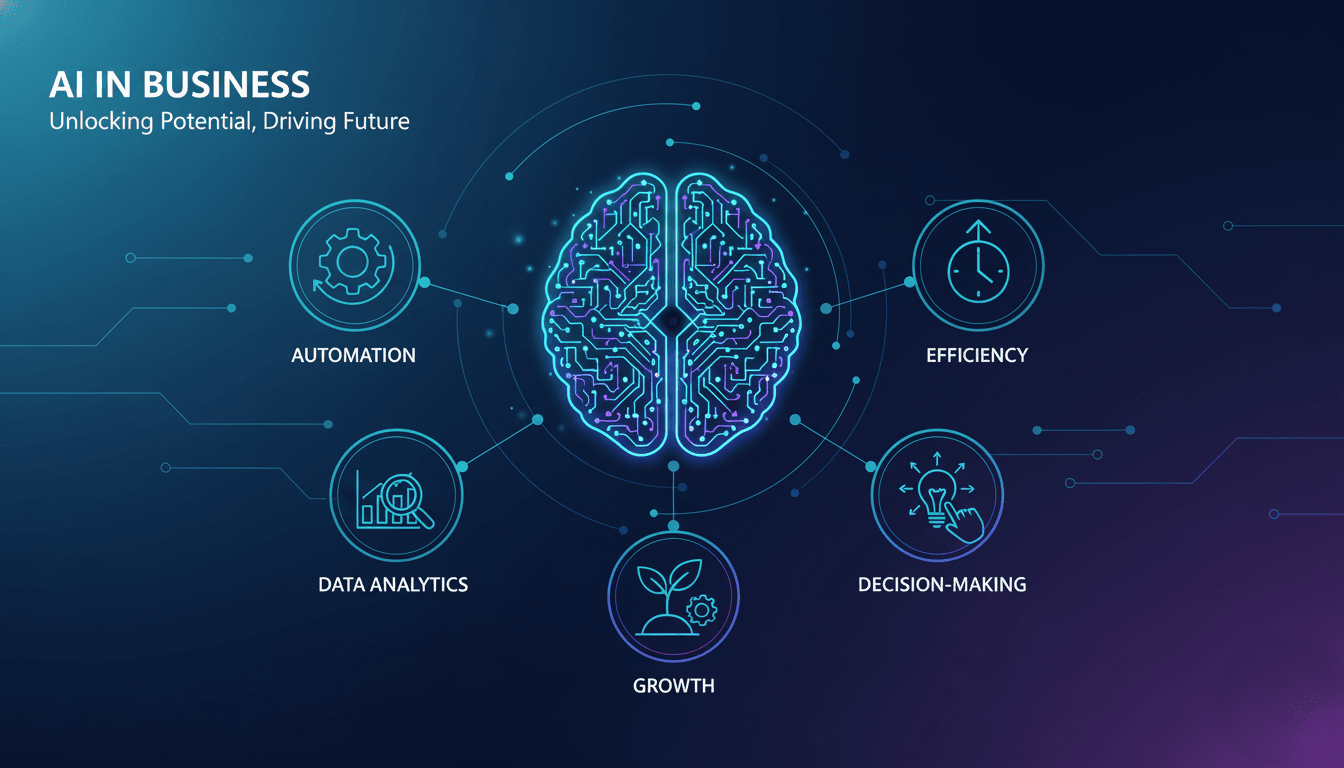
Artificial Intelligence (AI) has moved far beyond the realm of science fiction and futuristic movies. Today, it is a practical, driving force behind some of the most successful companies in the world. From small startups to global enterprises, business leaders are constantly asking how they can leverage this technology to save time, reduce costs, and drive growth. If you are looking for real-life examples of how AI is used in business, you are likely trying to understand not just the what, but the how and why behind this technological revolution.
This guide will walk you through the practical applications of AI across various departments and industries. We will explore how intelligent systems are transforming customer relationships, enhancing security, and even reshaping how companies hire talent. By the end of this article, you will have a clear understanding of the tangible benefits AI offers and how you can begin integrating these solutions into your own operations.
Examples of AI Being Used to Support Business Needs
The versatility of Artificial Intelligence lies in its ability to process vast amounts of data faster than any human team could. This capability allows businesses to optimize virtually every function, from the back office to the front lines of customer service. Below, we explore the specific areas where AI is making the biggest impact.
AI for Customer Relationship Management (CRM)
Customer Relationship Management (CRM) systems are the heartbeat of modern sales and support teams. Traditionally, these systems required manual data entry, which was prone to human error. AI has transformed CRMs into self-updating engines of insight. By using natural language processing (NLP), AI tools can automatically transcribe sales calls, analyze customer sentiment, and update contact records without human intervention. This ensures that sales teams always have the most current data, allowing them to focus on building relationships rather than managing spreadsheets.
AI for Employee Upskilling and Training
The rapid pace of technological change means that employees must constantly learn new skills. AI-driven learning platforms are revolutionizing corporate training by offering personalized learning paths. Instead of a "one-size-fits-all" seminar, AI algorithms analyze an employee’s current skill set and performance gaps to recommend specific courses or modules. This adaptive learning approach ensures that training is relevant, engaging, and directly applicable to the employee's daily tasks.
AI for Efficient Processes and Automation
Operational efficiency is often the first place businesses see a return on investment with AI. Robotic Process Automation (RPA), enhanced by machine learning, handles repetitive, rule-based tasks such as invoice processing, data migration, and scheduling. By offloading these mundane activities to intelligent bots, companies can free up their human workforce to tackle complex problem-solving and creative work, significantly boosting overall morale and output.
AI for Market Research and Predictive Analytics
Understanding market trends before they happen is a massive competitive advantage. AI tools use predictive analytics to scour social media, news outlets, and search trends to identify shifting consumer behaviors. This allows businesses to anticipate demand for new products or spot potential public relations crises before they escalate. Instead of reacting to the market, AI enables leaders to proactively shape their strategy based on data-driven forecasts.
AI for Increased Productivity
Productivity tools powered by AI are becoming ubiquitous in the modern office. Intelligent writing assistants help draft emails and reports faster, ensuring clear communication. Meeting assistants can join video calls, take notes, and assign action items to participants automatically. These incremental time-savers add up, allowing teams to accomplish significantly more within the standard workday without leading to burnout.
AI for Creativity and Content Generation
Generative AI has opened new doors for creative teams. Marketing departments use these tools to brainstorm ad copy, generate blog outlines, and even create visual assets for social media campaigns. While human oversight is crucial to maintain brand voice, AI serves as a powerful partner in the creative process, helping to overcome writer’s block and speeding up the production of high-quality content.
AI for Security and Fraud Prevention
As digital threats become more sophisticated, traditional security measures are often insufficient. AI systems excels at pattern recognition, making them ideal for cybersecurity. In the financial sector, AI algorithms analyze transaction behaviors in real-time to detect anomalies that indicate fraud. If a credit card is used in two different countries within an hour, the system can instantly flag the transaction and freeze the account, preventing loss before it occurs.
AI for Personalization
Modern consumers expect brands to understand their individual preferences. AI makes hyper-personalization possible at scale. E-commerce platforms use recommendation engines to suggest products based on a user's browsing history and past purchases. Similarly, streaming services use AI to curate playlists and movie suggestions. This level of tailored experience increases customer satisfaction and significantly boosts conversion rates.
AI for Decision-Making and Strategy
Business leaders are often overwhelmed by the sheer volume of data available to them. AI-powered business intelligence tools can synthesize this data into actionable insights. By simulating different scenarios and outcomes, these tools help executives make informed strategic decisions. Whether it is deciding on a new office location or pricing a new product, AI provides the evidence-backed confidence needed to move forward.
AI for Talent Acquisition and Management
Recruiting the right talent is time-consuming and expensive. AI is streamlining this process by automating the screening of resumes. Intelligent algorithms can scan thousands of applications to identify candidates who match the specific skills and experience required for a role. Beyond hiring, AI helps in talent management by identifying high-performing employees who might be at risk of leaving, allowing HR to intervene with retention strategies.
Techtimize - Bridging the Gap Between AI Theory and Business Reality
While conceptual AI is widely discussed, Techtimize specializes in the practical execution of these technologies within complex business environments. By transforming real-life use cases such as predictive customer behavior modeling and automated supply chain optimization into functional software, Techtimize serves as a critical bridge between innovation and operational success. The focus is on developing custom, AI-integrated platforms that do more than just process data; they provide actionable business intelligence that drives revenue and reduces manual overhead.
The technical architecture provided by Techtimize ensures that AI implementation is seamless, whether through the deployment of intelligent chatbots or the integration of machine learning algorithms into existing full-stack ecosystems. Using proprietary tools and advanced engineering frameworks, Techtimize enables companies to replicate the success of global AI leaders at a fraction of the traditional development time. This specialized approach ensures that businesses aren't just observing AI trends but are actively utilizing them to dominate their respective markets.To further explore how these technologies are built and deployed, a deep dive into the diverse range of Techtimize projects provides valuable insights into the infrastructure and technical execution required for such large-scale AI integration.
Businesses That Are Using AI & How (Industry Specifics)
To fully grasp the power of these technologies, it is helpful to look at industry-specific applications. Different sectors are adopting AI to solve unique challenges, from saving lives in hospitals to optimizing supply chains in factories.
AI in Finance
The finance industry was an early adopter of artificial intelligence. Beyond fraud detection, banks and investment firms use algorithmic trading to execute stock trades at speeds impossible for humans. These algorithms analyze market conditions in milliseconds to buy and sell assets at optimal prices. Additionally, robo-advisors are democratizing wealth management, offering personalized investment advice to individuals with lower capital, making financial planning accessible to a broader audience.
AI in Retail
Retailers are using AI to bridge the gap between online and offline shopping. Computer vision technology in physical stores can track foot traffic patterns to optimize store layouts and product placement. Online, inventory management systems predict stock shortages based on seasonal trends and purchasing history, ensuring that popular items are automatically restocked. This seamless integration ensures customers find what they want, when they want it.
AI in Manufacturing
In manufacturing, downtime can cost millions. This is why "predictive maintenance" is a game-changer. Sensors attached to factory machinery feed data to AI systems that monitor equipment health. The AI can predict when a part is likely to fail and schedule maintenance before a breakdown occurs. This shift from reactive repairs to proactive maintenance ensures continuous production lines and safer working environments.
AI in Healthcare
The impact of AI in healthcare is profoundly human. Machine learning algorithms assist radiologists in identifying abnormalities in X-rays and MRI scans with higher accuracy than the human eye alone. Furthermore, AI is accelerating drug discovery by simulating how different chemical compounds interact, cutting years off the development timeline for new life-saving medications. Virtual health assistants also provide patients with 24/7 support, answering basic medical questions and triaging cases for doctors.
Integrating AI into Customer Service Workflows
One of the most visible applications of AI is in customer support. Businesses often struggle with three core issues: low Customer Satisfaction (CSAT) scores, high agent churn, and general process inefficiencies. AI addresses these pain points directly.
Solving Low CSAT, NPS, and FSR
Customers hate waiting on hold. AI-powered chatbots and virtual agents provide instant responses to common queries, drastically reducing wait times. For complex issues that require human empathy, AI tools can route the customer to the best-suited agent, passing along the context of the conversation. This ensures the customer doesn’t have to repeat themselves, leading to higher Net Promoter Scores (NPS) and First Contact Resolution (FSR) rates.
Reducing High Agent Churn
Customer service agents often burn out from answering the same repetitive questions all day. By automating these routine inquiries,such as "where is my order?" or "how do I reset my password?",AI frees agents to handle more interesting, complex cases. This shift reduces the monotony of the job, leading to higher job satisfaction and lower turnover rates among staff.
Digital Assistants and Process Inefficiencies
Digital assistants act as co-pilots for support teams. During a live call, an AI assistant can listen to the conversation and instantly pull up relevant articles, account details, and troubleshooting steps for the agent. This reduces the "average handling time" of calls and ensures that the information provided is accurate and consistent across the board.
Challenges for Utilizing AI in the Business World
While the benefits are clear, implementing AI is not without hurdles. Business leaders must navigate several challenges to ensure a successful integration.
Data privacy is a primary concern. AI systems require vast amounts of data to learn, and businesses must ensure this data is collected and stored in compliance with regulations like GDPR. There is also the risk of algorithmic bias; if the historical data used to train an AI model contains biases, the AI’s decisions will reflect those flaws. This can lead to unfair hiring practices or loan approvals if not carefully monitored.
Furthermore, there is a technical barrier. Integrating AI into legacy systems can be complex and expensive. It requires a strategic approach, skilled personnel, and a willingness to adapt organizational culture. Without a clear strategy, businesses risk investing in expensive tools that do not solve their core problems.
Conclusion - Taking the Next Step
The integration of artificial intelligence into business operations is no longer a luxury; it is a necessity for staying competitive. From enhancing customer relationship management to revolutionizing manufacturing processes, the real-life examples of how AI is used in business demonstrate its transformative power. It allows companies to operate smarter, faster, and more efficiently.
However, the journey to AI adoption can be complex. It requires not just technology, but a partner who understands how to align these tools with your specific business goals. If you are ready to overcome the challenges and unlock the full potential of these innovations, you do not have to do it alone.
Implement AI in Your Business with Techtimize. Whether you need to streamline your customer service workflows, build custom automation, or develop a comprehensive data strategy, Techtimize provides the expertise to turn AI potential into business performance. Start exploring your options today and position your business for a smarter future.