AI in Software Development - Key Trends & How to Use It
Mobile App Development
The world of technology is moving faster than ever, and the pressure to deliver high-quality software at lightning speed is a constant challenge for businesses and developers alike. Traditional coding methods, while reliable, are often time-consuming and prone to human error. This is where AI in software development steps in, acting not just as a tool but as a transformative partner in the engineering process.
If you are wondering how Artificial Intelligence is reshaping the way we build applications, you are in the right place. This guide explores the evolution of coding, the innovative trends driving the industry forward, and practical ways you can leverage AI to write better code, test faster, and manage projects more efficiently. Whether you are a seasoned developer or a business leader, understanding these shifts is essential for staying competitive.
The Evolution of Software Development
To fully appreciate the impact of AI, it is helpful to look at where we started. Software engineering has always been about solving problems, but the methods have changed drastically over the decades. In the early days, development followed a rigid "Waterfall" model, where every stage had to be completed before the next began. This was effective for stability but terrible for flexibility.
As the demand for faster releases grew, the industry shifted toward Agile and DevOps practices. These methodologies emphasized collaboration, iterative updates, and continuous delivery. However, even with these improvements, the manual workload remained high. Developers still spent countless hours writing boilerplate code and debugging complex systems.
The introduction of automation and early AI tools marked the next great leap. Initially used for simple scripts and basic error checking, these tools have matured into sophisticated systems capable of understanding context and intent. Today, the integration of AI represents a paradigm shift, moving us from merely automating repetitive tasks to predicting issues and generating complex solutions autonomously.
Key Trends in AI-Driven Software Development
The current landscape of software engineering is being defined by several powerful trends. These are not futuristic concepts; they are practical applications being used right now to enhance productivity and code quality.
Enhanced Automation in Coding
Automation is no longer limited to running scheduled scripts. We are seeing a surge in code generation tools driven by large language models. These platforms can generate entire functions or classes based on simple natural language prompts. This significantly reduces the time spent on routine coding tasks, allowing developers to focus on complex logic and architecture.
Low-code and no-code platforms are also benefiting from AI. These tools allow non-technical users to build functional applications using visual interfaces, with AI filling in the technical gaps in the background. This democratization of development means that businesses can prototype and deploy solutions faster than ever before.
Intelligent Code Assistants
Imagine having a senior developer sitting next to you, reviewing every line of code as you type. That is the role of intelligent code assistants. These AI-powered tools integrate directly into the Integrated Development Environment (IDE). They offer real-time suggestions, complete lines of code, and even flag potential syntax errors before the code is compiled. This immediate feedback loop drastically reduces the cognitive load on developers.
Predictive Analytics in Development
One of the most exciting trends is the use of predictive analytics. By analyzing historical data from past projects, AI can predict future outcomes. For project managers, this means more accurate estimations for delivery timelines. For developers, it means identifying high-risk areas in the codebase that are likely to break, allowing teams to address vulnerabilities proactively rather than reactively.
Innovations Transforming Software Development
At the core of these trends are specific technological innovations that make intelligent development possible. Understanding these underlying entities helps clarify how AI actually "thinks" and assists.
Natural Language Processing (NLP)
Natural Language Processing (NLP) is the branch of AI that enables computers to understand and interpret human language. In software development, NLP is the magic behind tools that convert a comment like "create a login form" into actual HTML and CSS code. It bridges the gap between human intent and machine execution, making coding more intuitive.
Machine Learning in Software Testing
Testing has traditionally been a bottleneck in the release cycle. Machine Learning (ML) is transforming this by creating "self-healing" test scripts. If a button on a webpage changes its ID, a standard automation script would fail. However, an ML-driven tool can recognize that the button is still the same element despite the ID change and adjust the test automatically. This resilience significantly reduces the maintenance effort required for quality assurance.
Practical Applications - How to Use AI in Development
Knowing the trends is useful, but applying them is where the real value lies. Here is how AI is practically applied across the entire software development lifecycle (SDLC).
Code Generation and Boilerplate
AI excels at writing boilerplate code,the standard sections of code that are necessary but tedious to write. By automating the creation of standard file structures, API endpoints, and database connections, developers can jump straight into writing the unique business logic that actually differentiates the application.
Bug Detection and Fixing
Finding a bug in thousands of lines of code is like finding a needle in a haystack. AI tools can scan codebases to detect patterns that typically lead to errors. beyond just finding bugs, advanced systems can suggest specific fixes or refactored code segments to resolve the issue, saving hours of debugging time.
Automating Testing Processes
AI-driven testing goes beyond running pre-written scripts. It can automatically generate test cases based on the code's logic. Visual regression testing tools use AI to spot pixel-perfect differences in the user interface that a human eye might miss. This ensures a consistent user experience across different devices and browsers.
Project Management and Estimation
AI is transforming project management by analyzing team velocity and historical performance. It can identify potential bottlenecks in workflows and suggest resource reallocation. This data-driven approach removes the guesswork from sprint planning and helps teams meet deadlines more consistently.
Documentation and Knowledge Sharing
One of the most neglected areas in development is documentation. AI can analyze the codebase and automatically generate technical documentation, API references, and "ReadMe" files. This ensures that documentation stays up-to-date with the latest code changes, facilitating better knowledge sharing among team members.
Refactoring and Security Enhancement
Refactoring is the process of cleaning up code without changing its functionality. AI can identify messy or inefficient code blocks and suggest cleaner, more optimized alternatives. On the security front, AI tools scan for vulnerabilities such as SQL injection risks or outdated dependencies, acting as a tireless security guard for your application.
DevOps and CI/CD Pipelines
In the realm of DevOps, AI optimizes Continuous Integration and Continuous Deployment (CI/CD) pipelines. It can analyze logs to predict deployment failures and optimize server resource allocation. This ensures that the infrastructure supporting the software is as efficient as the code itself.
UX and Architecture Design
AI is even making waves in design. For UX designers, AI can analyze user behavior data to suggest layout improvements that increase engagement. in system architecture, AI can assist in designing scalable cloud infrastructures by recommending optimal configurations based on expected traffic loads.
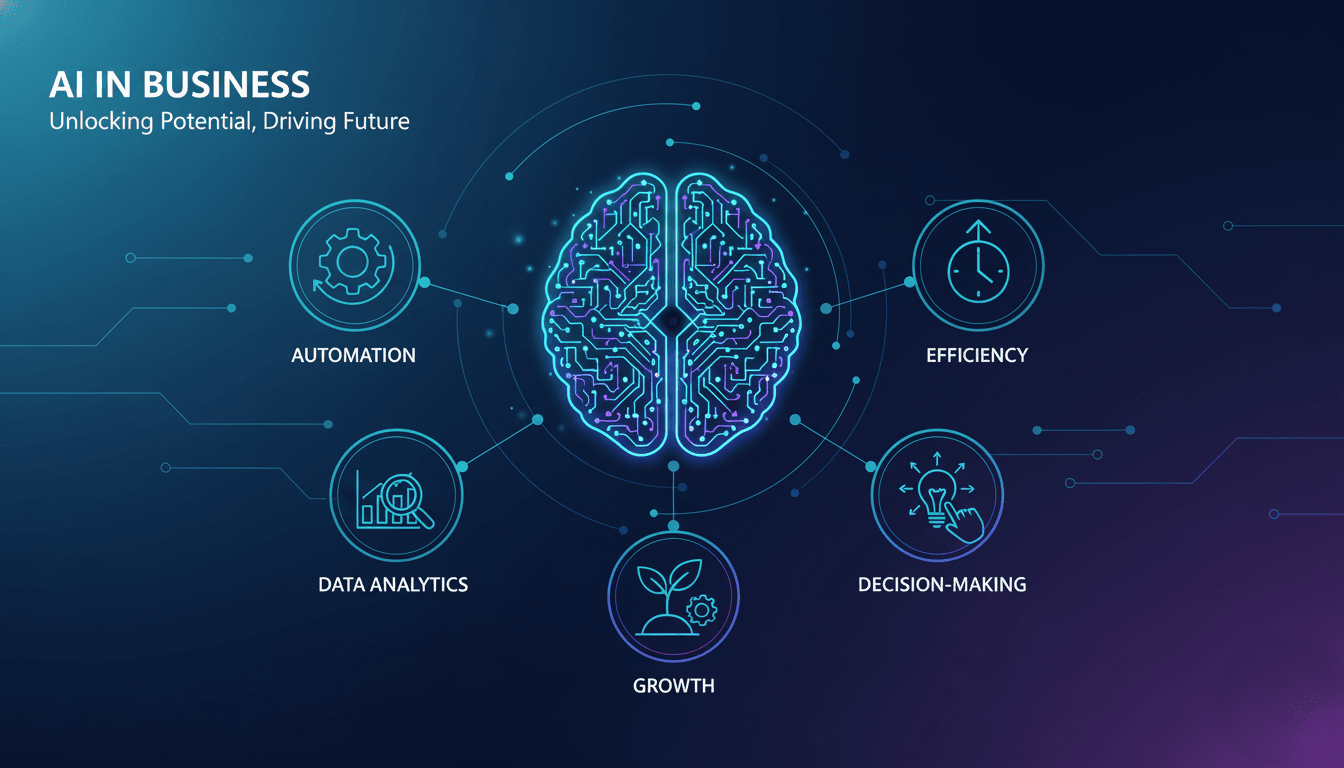
Discover how AI is reshaping modern industry standards and explore the full potential of these innovations by reading the complete blog on the Benefits of Artificial Intelligence in Business .
Who Can Use AI in Software Development?
The utility of AI in software development extends beyond just the programmers.
- Developers - Use it for coding assistance, debugging, and refactoring.
- QA Engineers - Use it for generating test cases and automated visual testing.
- Project Managers - Use it for timeline estimation and risk assessment.
- Product Designers - Use it to convert sketches into code prototypes rapidly.
- Business Stakeholders - Use it to gain insights into development progress and time-to-market predictions.
Techtimize - Leading the Frontier of AI-Driven Software Engineering
The landscape of software development is undergoing a seismic shift, and Techtimize stands as a pivotal specialist in this transformation. By integrating advanced Artificial Intelligence into every layer of the Software Development Life Cycle (SDLC), Techtimize enables the creation of high-performance, full-stack applications with unmatched efficiency. The focus remains on replacing traditional, manual coding bottlenecks with intelligent automation, ensuring that businesses can move from initial concept to a deployable, scalable product in record time.
Utilizing cutting-edge frameworks and proprietary AI-assisted methodologies,Techtimize architects software that is inherently secure, mobile-responsive, and future-proof. The engineering process prioritizes clean code, rapid prototyping, and predictive debugging, which slashes technical debt and maximizes operational uptime. From enterprise-grade microservices to custom AI-driven business tools, the technical expertise at Techtimize ensures that every digital solution is built to dominate its respective market. Partnering with a specialized firm like Techtimize guarantees that a company’s software infrastructure is not just functional, but a strategic engine for long-term innovation and growth.Modern engineering standards now demand a seamless transition between web and mobile ecosystems, making the implementation of advanced app development strategies essential for achieving a unified digital presence across all platforms.
The Benefits of AI in Software Development
The adoption of AI brings tangible benefits that directly impact the bottom line. The most immediate benefit is speed. By automating repetitive tasks, teams can release features faster. This speed does not come at the cost of quality; in fact, accuracy often improves because machines do not get tired or distracted.
Cost reduction is another significant advantage. While there is an initial investment in tools, the reduction in manual hours and the prevention of costly post-deployment bugs result in long-term savings. Furthermore, AI fosters innovation by freeing up developers' mental energy to focus on creative problem-solving rather than mundane syntax issues.
Mitigating Potential Risks and Challenges
Despite the benefits, relying on AI comes with challenges. A major concern is security and data privacy. Sending proprietary code to cloud-based AI models can pose a risk if not managed correctly. Companies must ensure that their AI tools comply with data protection regulations.
Another risk is over-reliance. If developers rely too heavily on AI generation, they may lose a deep understanding of the underlying code, making it difficult to debug complex issues that the AI cannot handle. There is also the issue of bias; since AI models are trained on existing code from the internet, they may inadvertently perpetuate bad coding practices or security flaws present in the training data.
Overcoming Obstacles with AI Solutions
To successfully integrate AI, organizations should adopt a "human-in-the-loop" approach. AI should be viewed as an assistant, not a replacement. Code generated by AI must always be reviewed by a human expert.
Investing in training is also crucial. Teams need to learn how to write effective prompts for AI tools and how to interpret their outputs critically. By establishing clear governance policies regarding which tools are permissible and how data is handled, businesses can mitigate risks while reaping the rewards of innovation.
Conclusion
The integration of AI in software development is not a fleeting trend, it is the new standard for building digital products. From the early days of manual coding to today’s intelligent ecosystems, the goal has always been to build better software, faster. AI helps us achieve that by handling the repetitive and analytical heavy lifting, allowing humans to focus on creativity and strategy.
By embracing these tools,from code generation to automated testing,you can transform your development lifecycle, improve product quality, and stay ahead in a competitive market. The future of coding is collaborative, with human ingenuity leading the way and artificial intelligence providing the power to scale.
Are you ready to optimize your development process? Start by integrating a single AI tool into your workflow today and observe the difference in productivity.